Bathroom Remodeling overview
Bathrooms take more water and humidity than any other room in the house. When tile cracks, grout fails, or a fan does not vent properly, moisture gets into the walls and subfloor, and the damage often stays hidden until it is serious.
A good bathroom remodel starts with what goes behind the tile. That means solid framing, a flat floor, a waterproof shower system, correct slope to the drain, and an exhaust fan vented outside, not into the attic. Get those right and the finishes last.
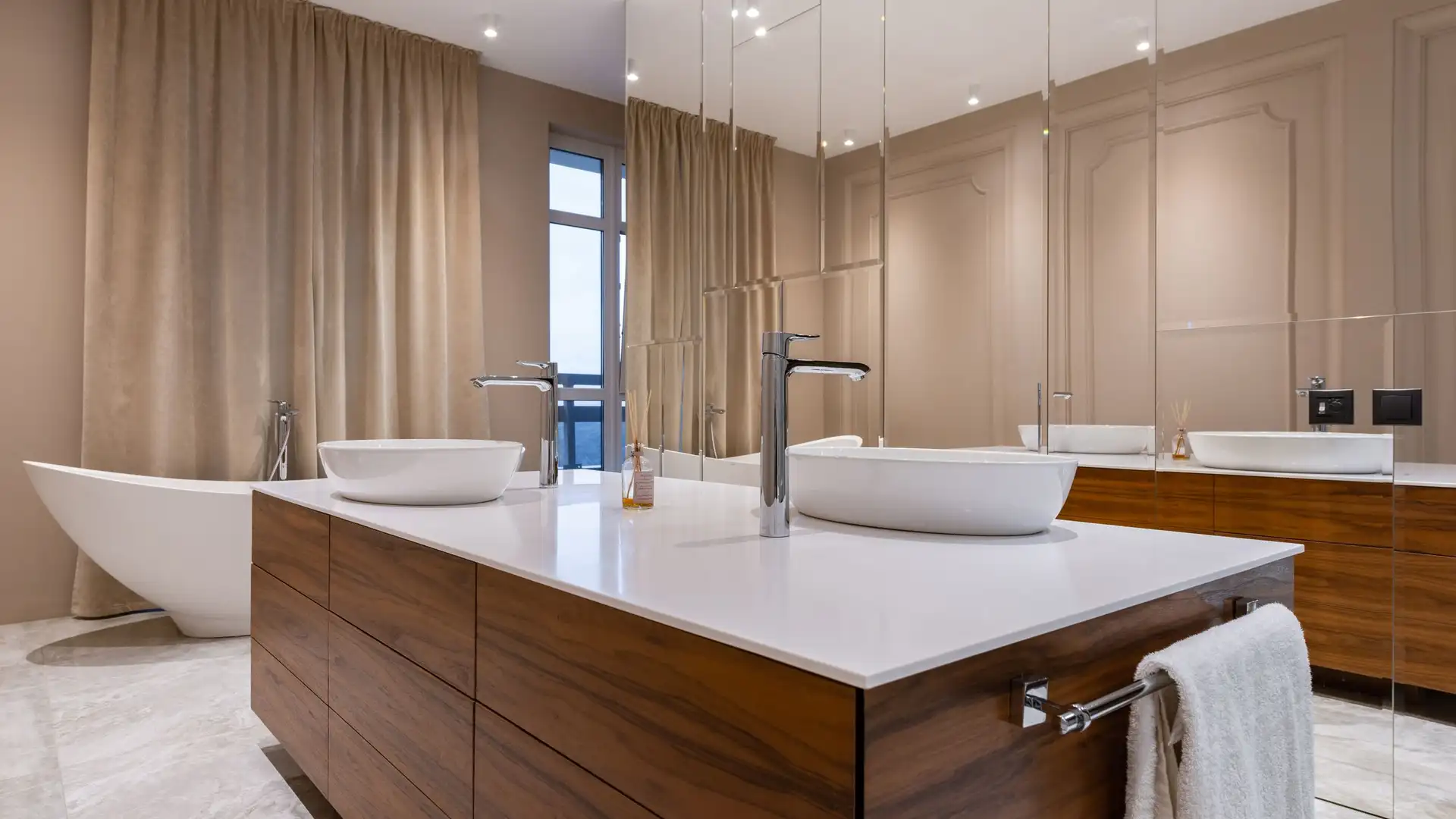
We remodel hall baths, primary bathrooms, and powder rooms. Whether you want a walk-in shower in place of an old tub, a double vanity, or better storage and lighting, we plan it with you and explain each choice before work starts.
What Our Bathroom Remodeling Includes
- 01
Showers and tub replacement
We install new tubs, tub-to-shower conversions, and walk-in showers with a waterproof membrane behind the tile, sloped pans, and drains set so water goes where it should.
- 02
Tile work
Floors, shower walls, niches, and backsplashes are tiled on flat, properly prepared surfaces with tight layouts and consistent grout lines that are easy to keep clean.
- 03
Vanities, toilets, and fixtures
We set new vanities, tops, sinks, faucets, and toilets level and sealed, and we coordinate plumbing changes when you move a fixture or add a second sink.
- 04
Flooring and subfloor repair
Soft spots around the toilet or tub usually mean water damage. We repair or replace the subfloor before installing tile or LVP so the new floor stays flat and solid.
- 05
Ventilation and lighting
An exhaust fan vented to the outside protects your walls and ceiling from moisture. We also add vanity lighting, recessed lights, and GFCI outlets where they are needed.
Signs Your Bathroom Needs a Remodel
- ✓ The floor feels soft or spongy near the toilet or tub.
- ✓ Grout is cracked, tile is loose, or caulk keeps failing.
- ✓ Mold or mildew comes back no matter how often you clean.
- ✓ Paint peels on the ceiling because the fan does not clear steam.
- ✓ The tub is hard to step into and you want a walk-in shower.
- ✓ There is not enough storage or counter space for the people using the room.
What Drives the Cost of a Bathroom Remodel
Bathrooms vary a lot in size, condition, and finishes, so there is no honest flat price until we see the room. These factors drive the total.
- Scope and size
- A powder room refresh costs far less than a full primary bath gut. The amount of tile, number of fixtures, and square footage all affect materials and labor.
- Shower and tub choice
- A tub replacement is simpler than a custom tiled walk-in shower. Tile showers need a waterproof system, a sloped pan, and more labor, and glass enclosures add cost.
- Tile and finishes
- Tile size, material, and pattern affect both material and labor. Large-format and intricate patterns take more time to lay out and set correctly than simple layouts.
- Moving plumbing
- Keeping the toilet, tub, and sink where they are saves money. Relocating fixtures means opening floors and walls to run new supply and drain lines.
- Water damage and subfloor
- Older bathrooms often hide rot in the subfloor or wall framing. Repairing that damage is necessary before the new bathroom goes in and adds to the scope.
The fastest way to a real number is a free on-site estimate. You’ll get a written scope you can compare line by line. Prefer to talk first? Contact Leveled Up Construction or call (724) 718-3939.